A sample journey
Girona & Empordà
Five riding days from the medieval villages of the plain to the olive groves, followed by a final day on the coast by wooden boat. You ride from studio to cellar, in the company of the ceramists, perfumers, cooks and winegrowers who keep this corner of Catalonia singular.
How we’d make this journey yours
The seven days below are the journey as we rode it. Yours will be redrawn around you, from the hosts you meet to the distances, the houses and the order of the days.
If ceramics are a particular interest, we can leave a morning free for a visit arranged with the maker in Púbol. On the coast, you might all ride to lunch in Calella de Palafrugell, then split for the afternoon. Some can return through the cork woods while others follow the coast road toward Tossa de Mar. We plan the routes, pickups and meeting points. You’re back together for dinner at Mas de Torrent.
This is a private journey. Ride with a guide or independently, with luggage transfers between hotels and a support vehicle for the riding days.
Day by day, as we rode it
Day oneArrival in Girona
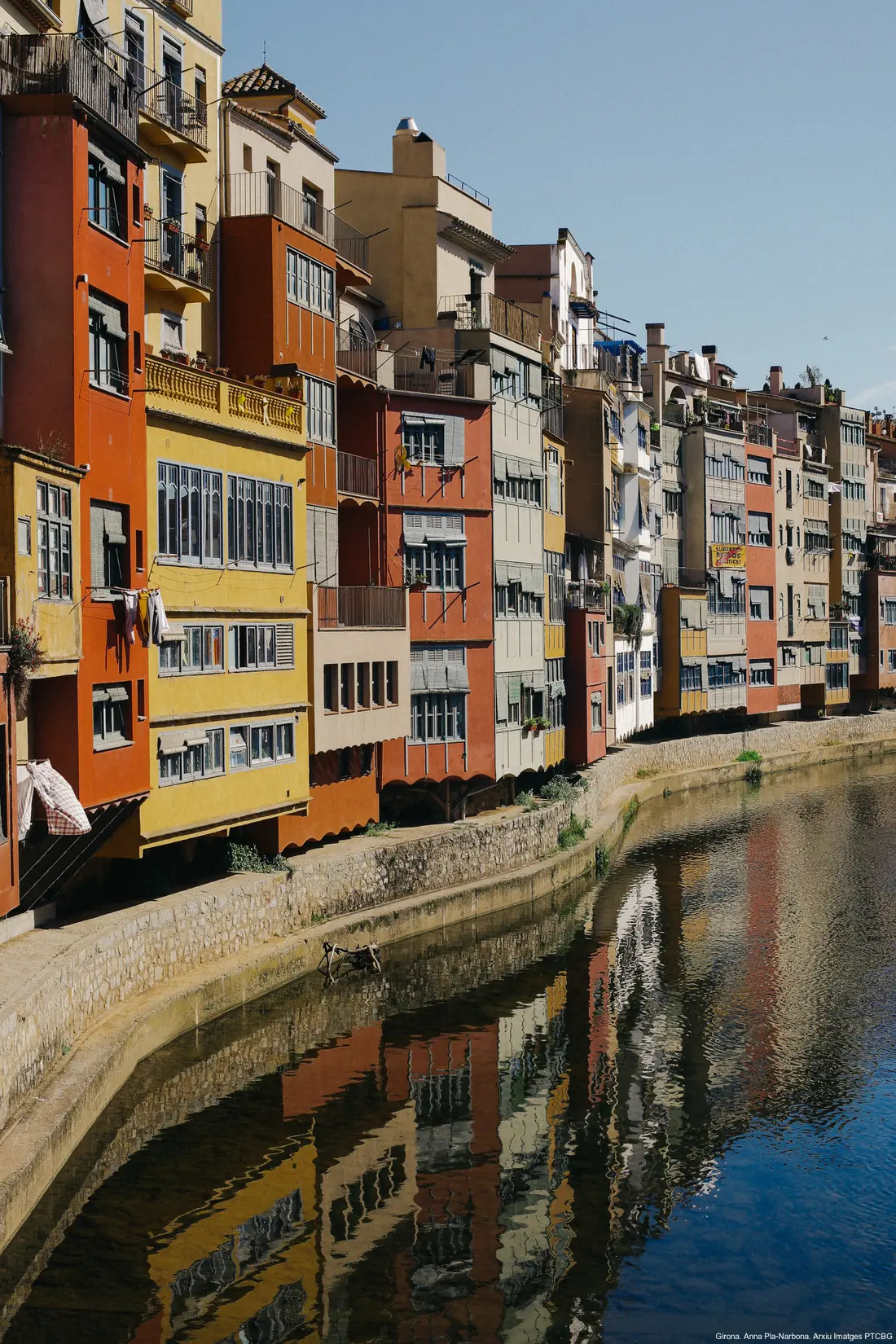
Benvinguts a Girona!
Arrival in Girona, an hour from Barcelona, and straight to Palau Fugit in the old town. Early afternoon at the workshop for the bike fitting: saddle height, pedals, a short spin along the river to check that everything sits right, whichever bike you have chosen.
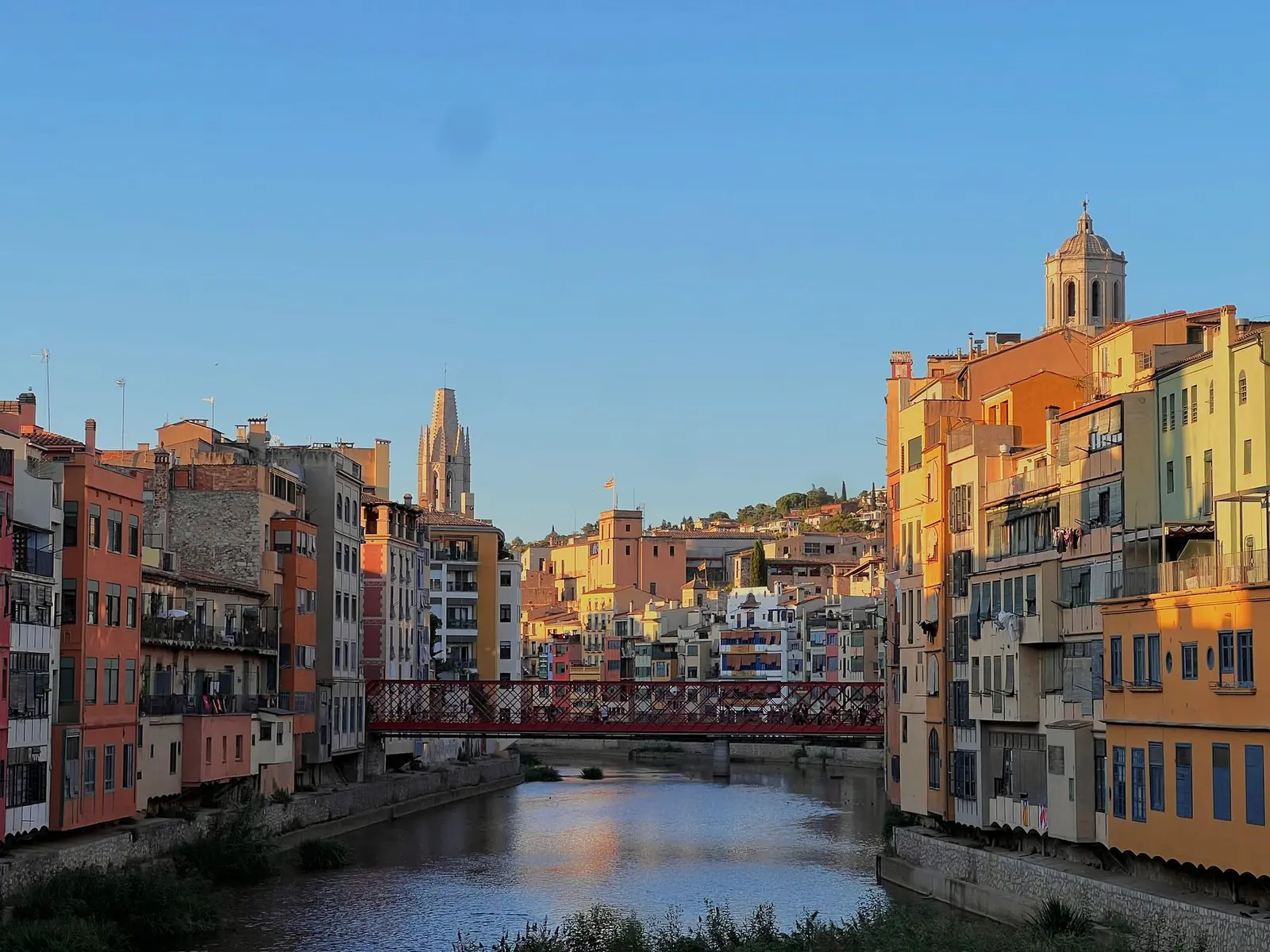
Then discover Girona beyond the cycling destination: the Call, one of Europe’s best-preserved medieval Jewish quarters; the cathedral steps; the painted houses hanging over the Onyar. In the evening, plunge into the Catalan culinary scene with dinner in the Barri Vell, at one of the tables of the Roca brothers, whose El Celler de Can Roca holds three Michelin stars.
Day twoGirona to Torrent, by way of Els Àngels and Púbol42 km / 26 mi
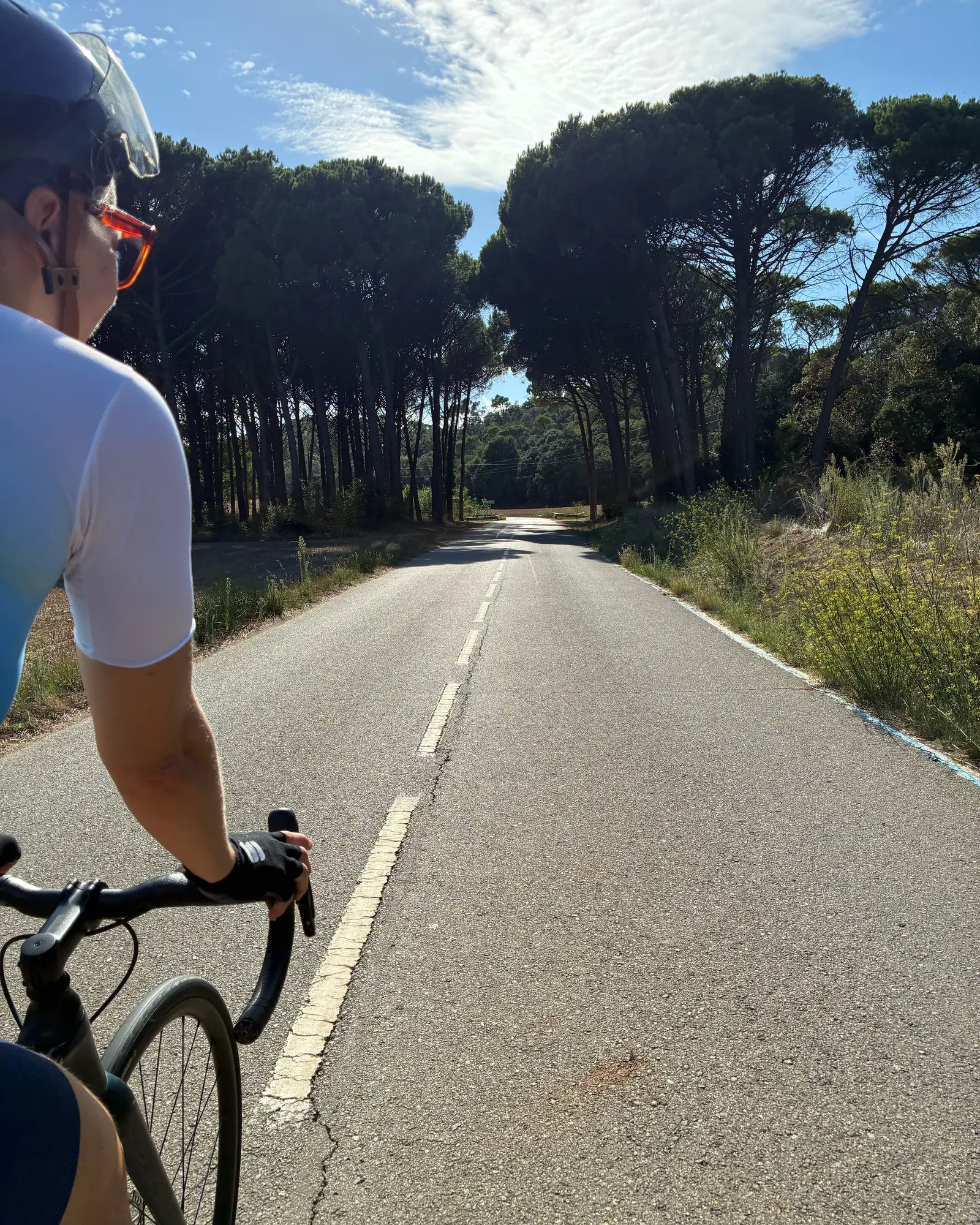
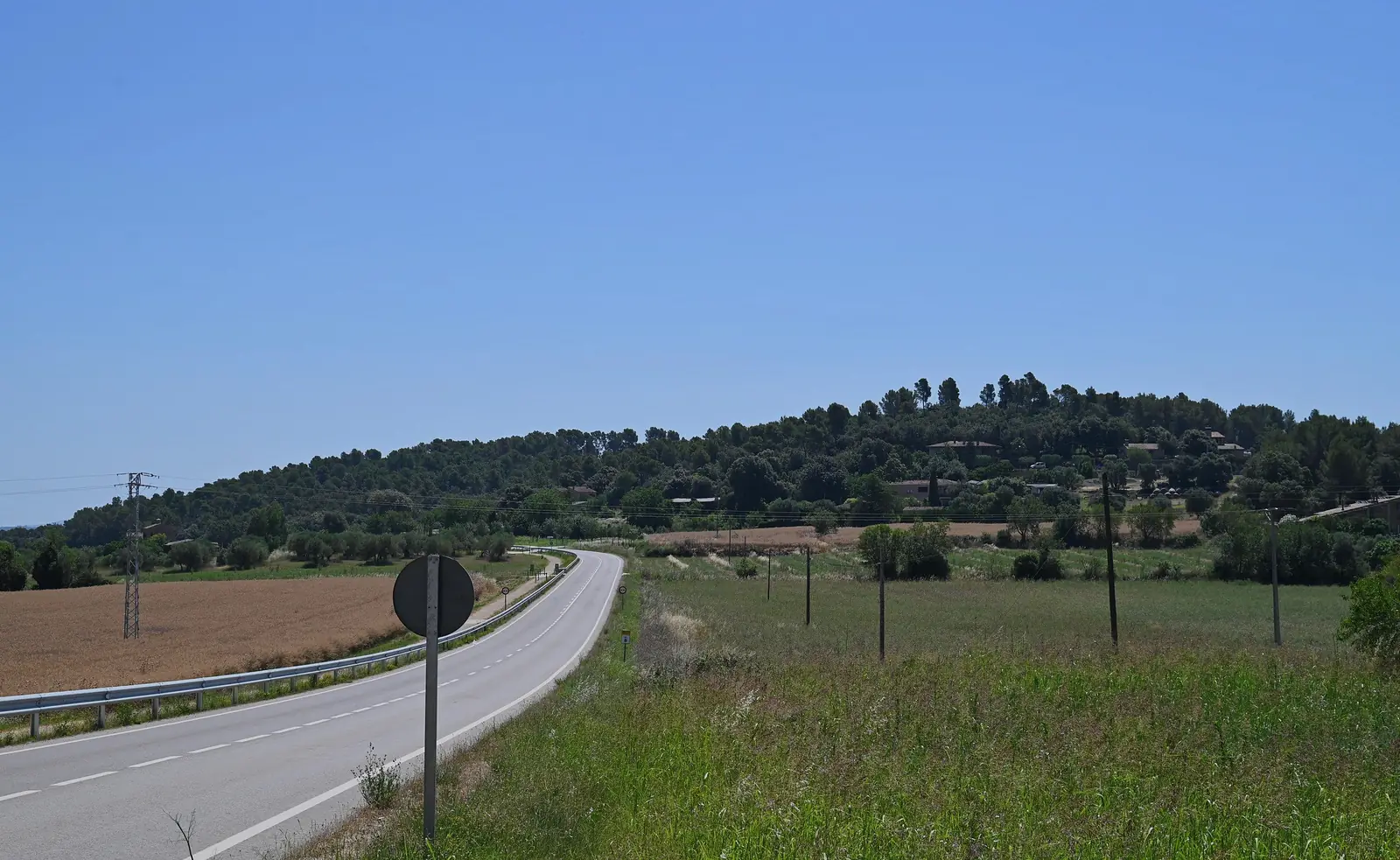
A steady climb through cork oak to the sanctuary of Els Àngels, then rolling farm lanes down to wheat, poplars and the stone villages of the plain.
Out of Girona by a long climb to the sanctuary of Els Àngels, where Salvador Dalí and Gala were married in church on August 8, 1958, with the plain laid out below. The descent drops through the Gavarres to Madremanya, where the hills lean over the plain.
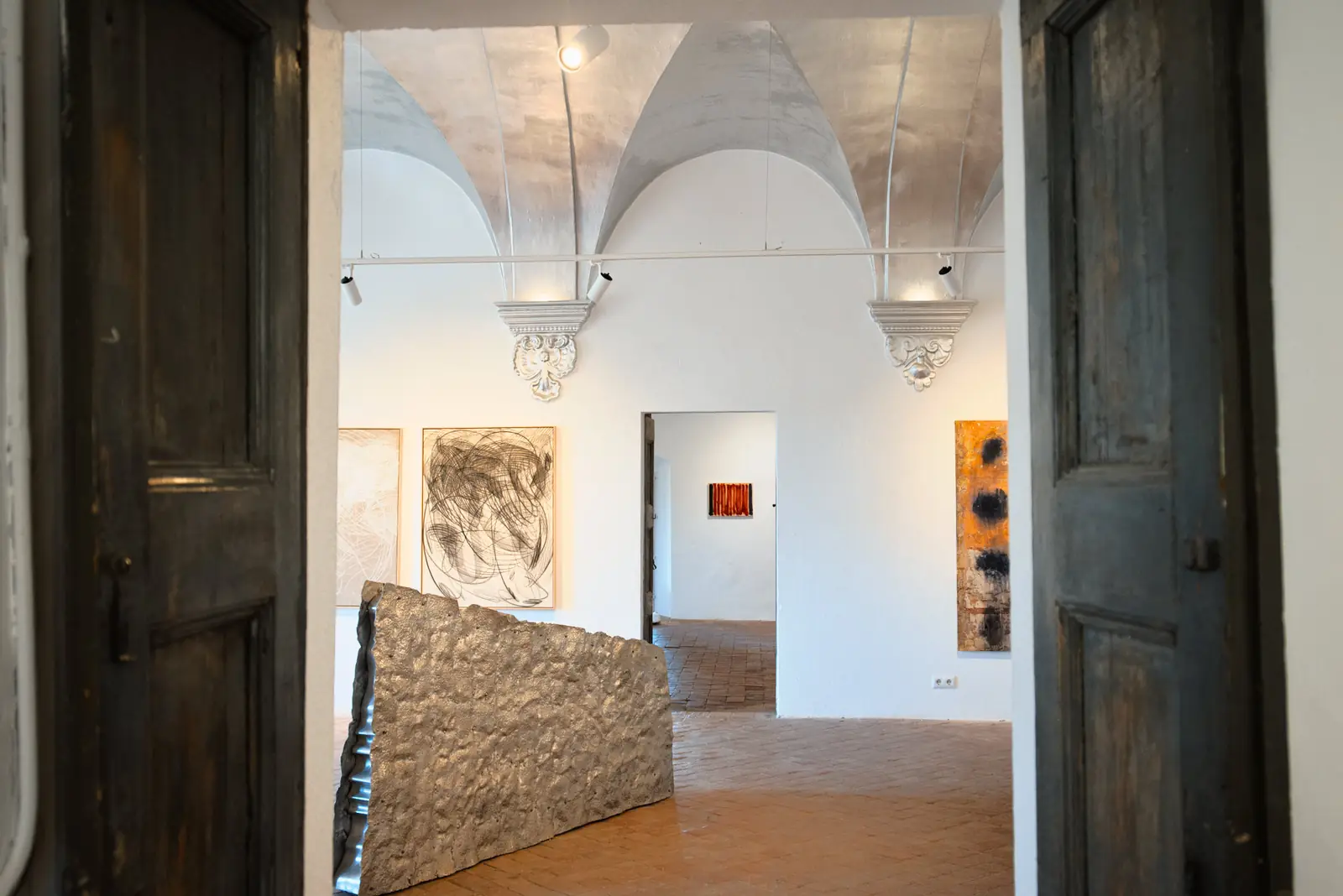
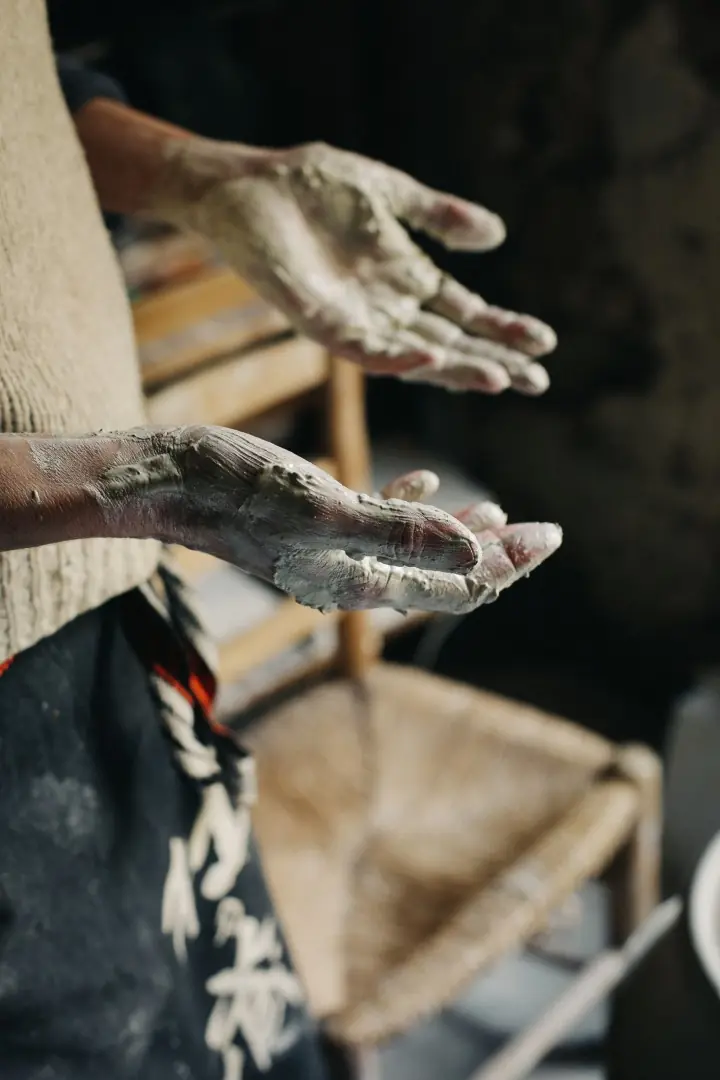
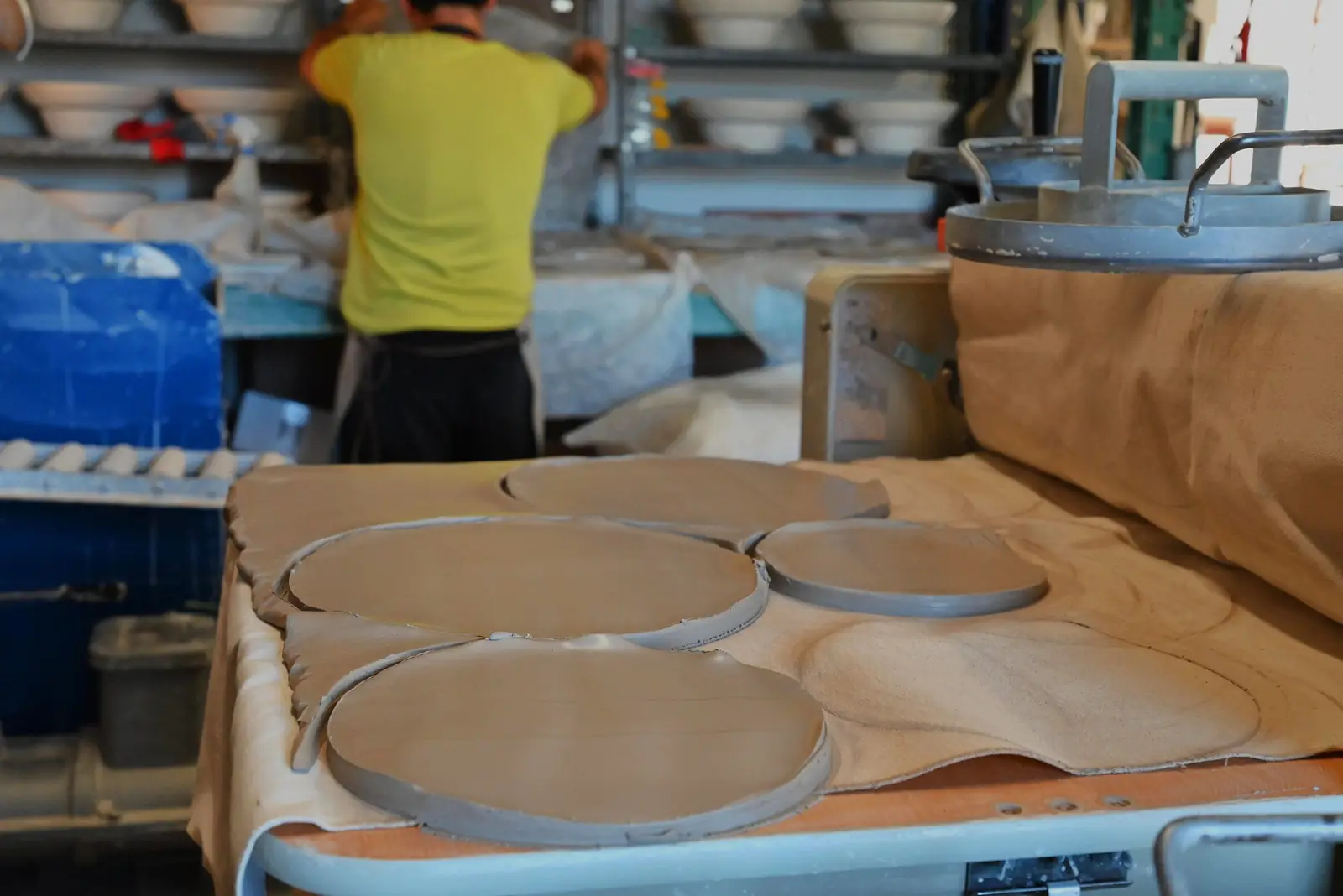
The afternoon belongs to Púbol, a hamlet of a few dozen souls with two improbable addresses on its single square: the castle Salvador Dalí bought for Gala in 1969, and the casa-estudi of a ceramist whose wood-fired vessels are shaped as much by flame and ash as by hand. From Púbol the lanes run east to Casavells, where a contemporary gallery hangs its art in an old palace, then on to Hotel Mas de Torrent.
Or stay longer at the ceramist’s studio in Púbol and let the vehicle carry you the last stretch to Torrent.
Day threeThe medieval triangle and the clay towns56 km / 35 mi
Flat to gently rolling between the stone villages.
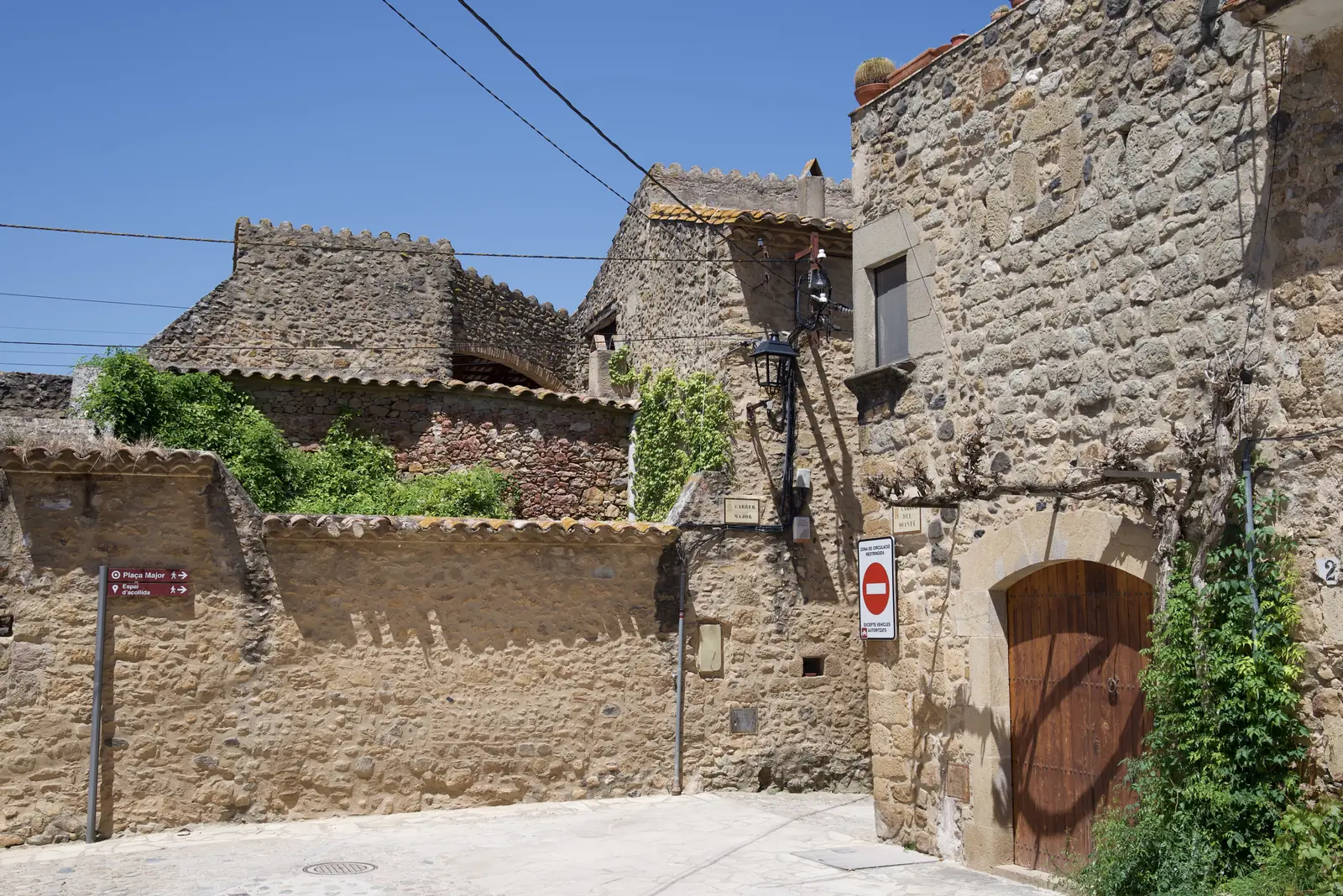
The loop heads west first, to Monells and its arcaded square. From Corçà, the lanes turn north to Ullastret, once the site of an Iberian city. Peratallada comes next: a fortified village literally "carved stone", moat and all.
La Bisbal d'Empordà is the working capital of Catalan ceramics: a high street of kilns, where the Terracotta Museum holds the industrial memory and family workshops still throw, glaze and fire a few doors down. From there the road climbs to a small biodynamic estate between the Gavarres woods and its vines, for a tasting among the barrels, then rolls home to Torrent. The loop is 56 kilometers (35 miles); it shortens easily, and the vehicle is never far.
Or keep to the villages on a shorter loop and spend the time you’ve saved in the workshops of La Bisbal.
Day fourCoastal route42 km / 26 mi
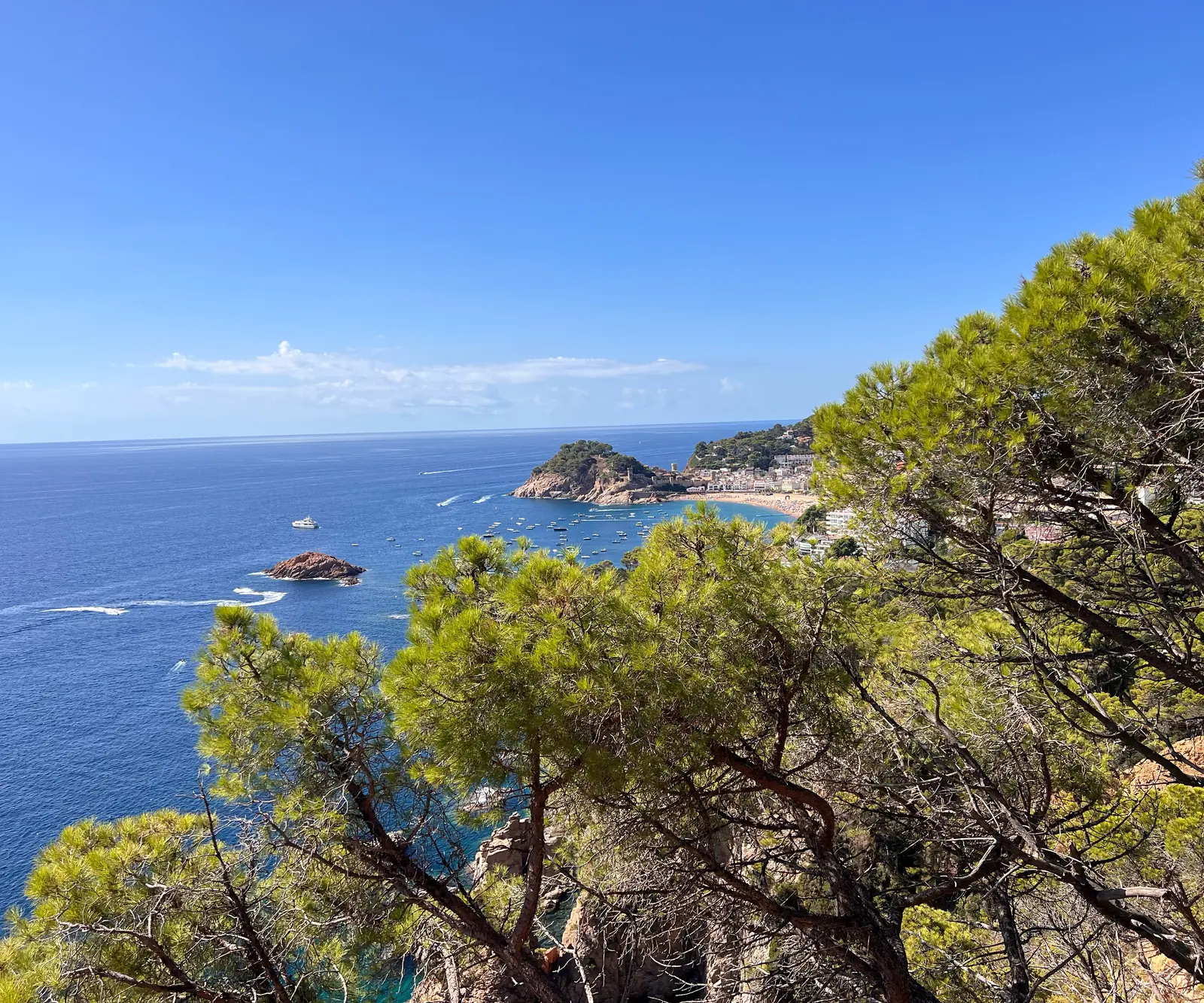
The day's character is staccato: short steep ramps to Begur and between coves, rewarded each time by turquoise water. Swim kit in the day-bag.
Begur's skyline is punctuated by towers built against pirates and mansions built by indianos, locals who made fortunes in Cuba. Drop to Aiguablava for the first swim, then thread the corniche to Tamariu and Llafranc.
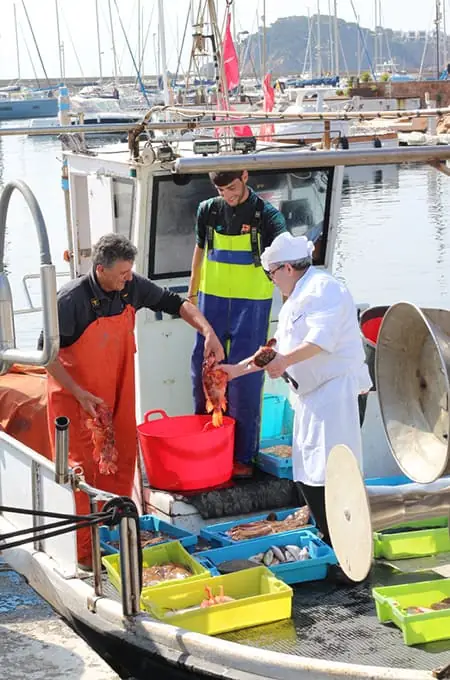
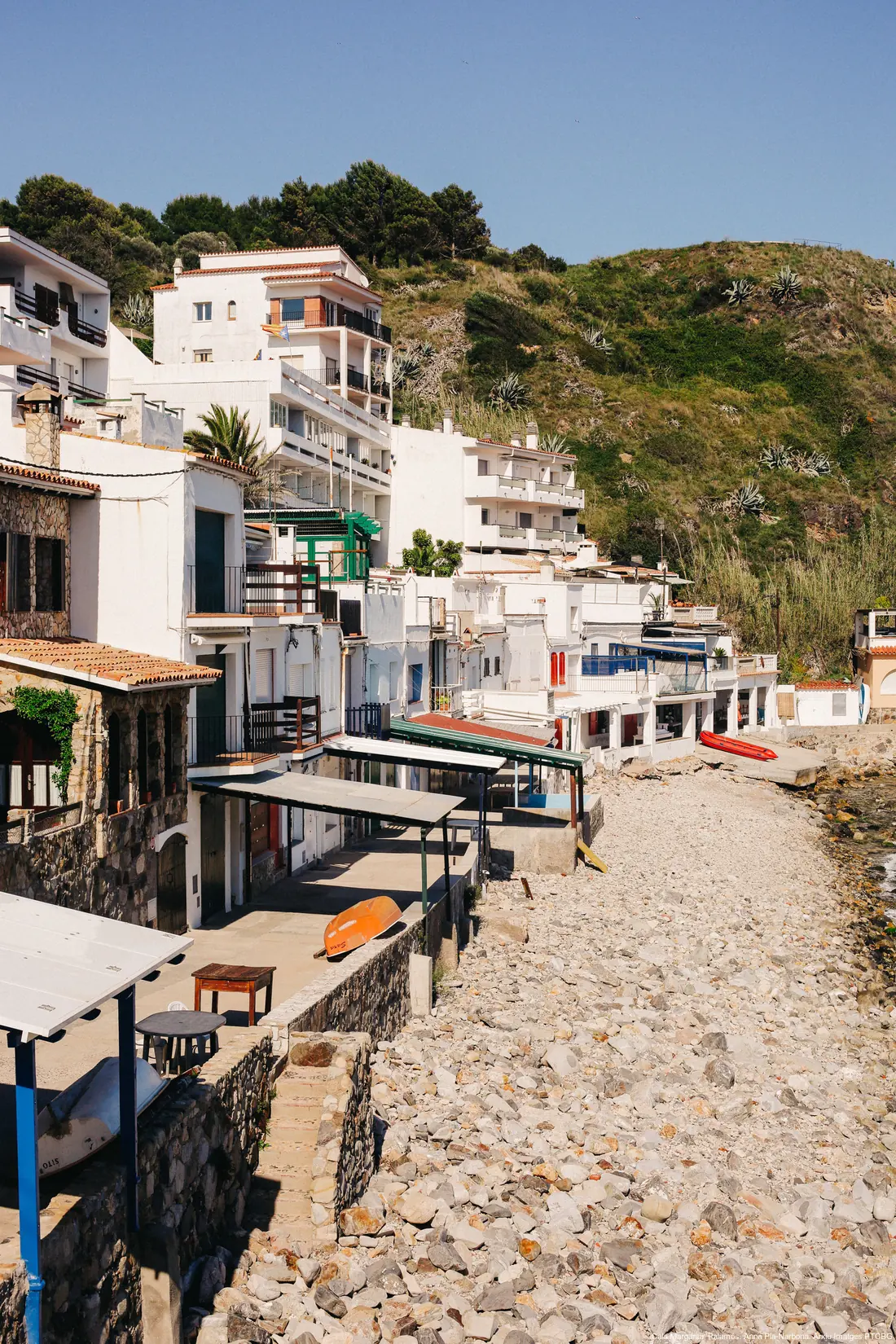
Calella de Palafrugell, all white arcades and beached llaüts (wooden fishing boats), is the home port of the havanera, the sailors' songs that crossed back from Cuba with the cork trade. Ride home through the cork-oak woods. When we rode this stretch, it was the repeated climbs out of the coves, more than the distance, that made us glad we’d left the afternoon open.
Or ride on from Calella along the legendary coast road between Sant Feliu de Guíxols and Tossa de Mar, all curves above the sea, while the others head home through the cork woods.
Day fiveAcross the plain to Empúries and the salt45 km / 28 mi
River levees and rice-flat lanes under the Montgrí massif, with the sea arriving as a surprise at Sant Martí.
North across the Ter under the bare limestone hump of the Montgrí. At Sant Martí d'Empúries, you ride straight into the founding scene: Empúries, where Greeks from Phocaea beached in the 6th century BC and Rome later landed to begin the conquest of Hispania.
Next door, L'Escala has salted anchovies since the 16th century at industrial scale, and still does it by hand: barrels, brine, patience. A salting house opens its doors; the town's Alfolí de la Sal, the old royal salt store, holds both the story and the memory of Caterina Albert, the woman who wrote rural Catalonia's darkest masterpiece under the name Víctor Català. Late afternoon, a short transfer carries you inland to Peralada, its castle and its cellars, where the vineyards of the Alt Empordà begin. Those who want a longer route can go on around the Gulf to Roses, then inland through Palau-saverdera and Vilajuïga under the Rodes ridge, close to a hundred kilometers (some sixty miles) in the day.
Or skip the transfer and ride the thirty kilometers (about nineteen miles) to Peralada past the marshes of the Aiguamolls.
Day sixDiscovering the olive groves38 km / 24 mi
A loop from the hotel through the foothills of the Albera: olive terraces and old vines on schist, short climbs, long views back over the plain to the Gulf of Roses.
North of Peralada the lanes climb gently toward the Albera through Garriguella, Vilamaniscle and Rabós, villages of old olive groves: Argudell, the small native olive of the region, planted on dry-stone terraces between the vines and bent by the tramuntana.
At Cantallops, under the massif, an actor turned wild perfumer leads a slow walk through the garrigue, teaching you to read rockrose, immortelle and crushed lentisc the way a sommelier reads a glass. The afternoon rolls back down through Mollet de Peralada to the hotel.
Or add the climb from Vilajuïga to Sant Pere de Rodes, the great Romanesque monastery suspended above the sea.
Day sevenCadaqués: Dalí’s house and the coast by llaüt
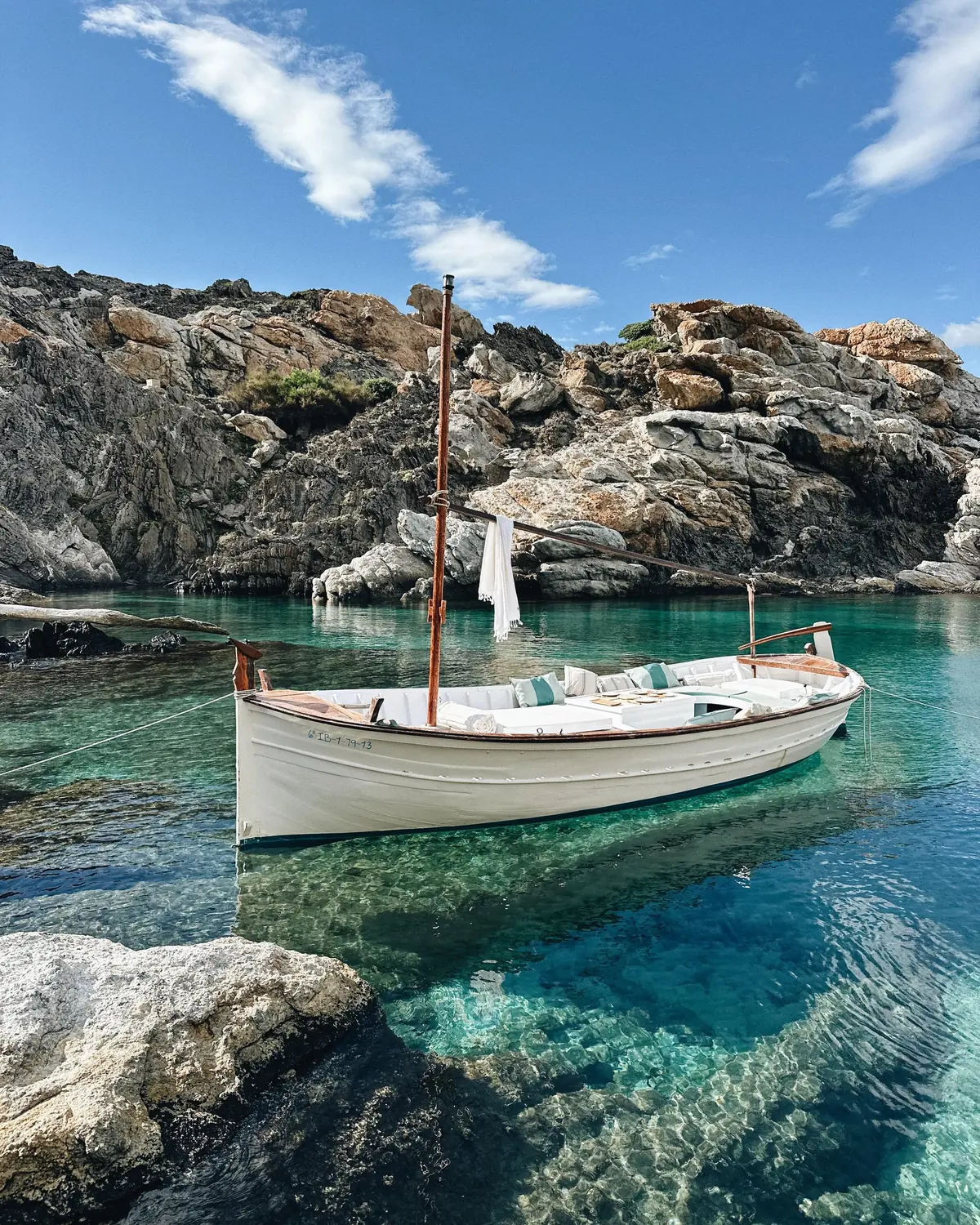
A last day off the bike: Dalí’s house at Portlligat in the morning, then the coves of Cap de Creus from the water.
A morning transfer carries you over the Perafita pass to Cadaqués, the whitewashed village Dalí called the most beautiful in the world. Portlligat first: his house, grown over forty years from a fisherman’s hut into a white labyrinth above a small harbor, where he did most of his work. Visits are by timed entry, which we book for you.
Then out on the water in a llaüt, the traditional wooden boat of this coast, along the coves and wind-carved rock of the Cap de Creus natural park, with a swim at anchor when the sea allows. Back in Cadaqués there is time for a last walk through the village where Duchamp spent his summers. Departure is mid-afternoon.
Or stop at the Dalí Theatre-Museum in Figueres on the way out.
The houses
Palau Fugit
An eighteenth-century palace in Girona’s old town, restored as a small hotel a few minutes on foot from the cathedral. The first evening is spent walking: the Call, the river, dinner in the Barri Vell.
Mas de Torrent Hotel & Spa
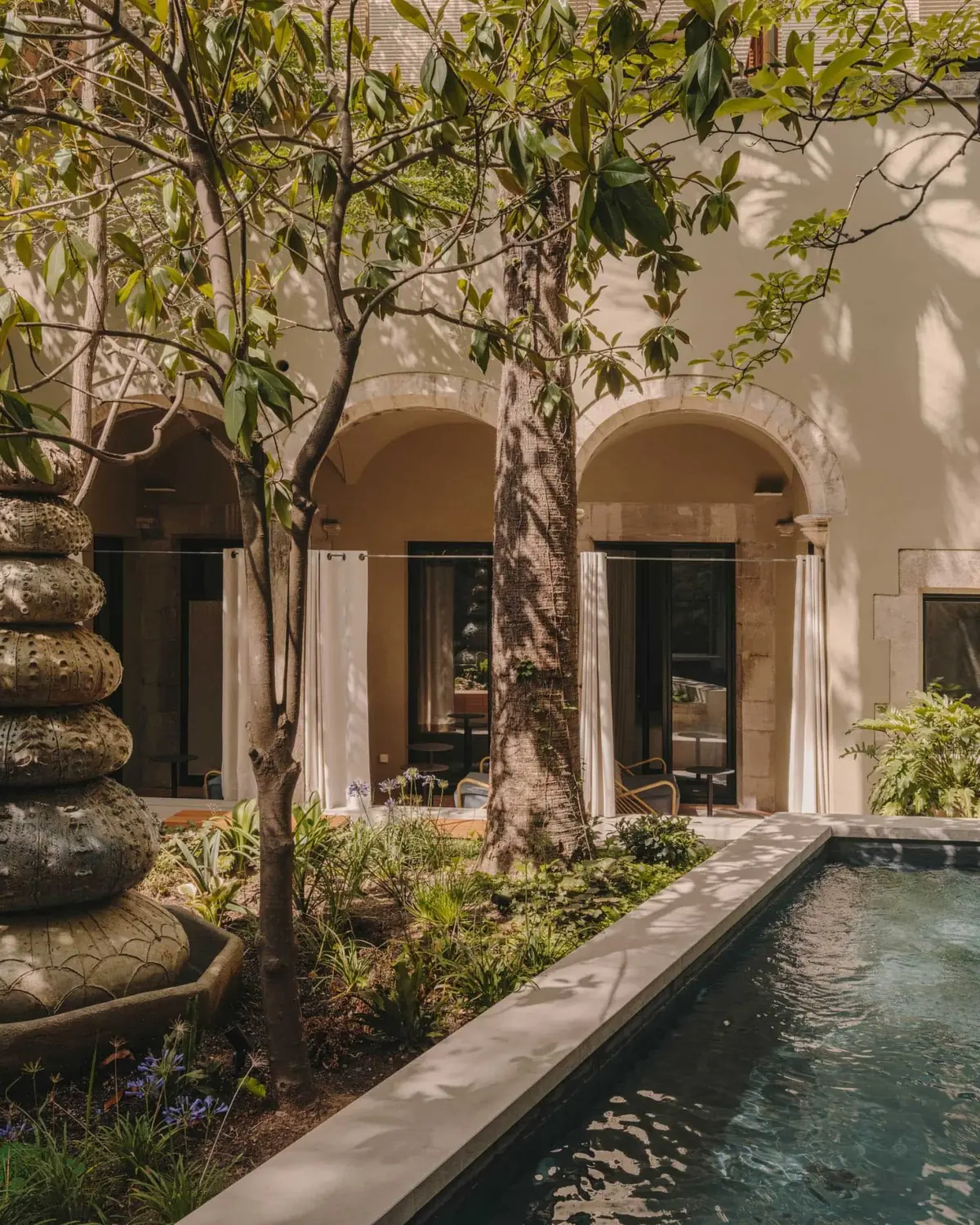
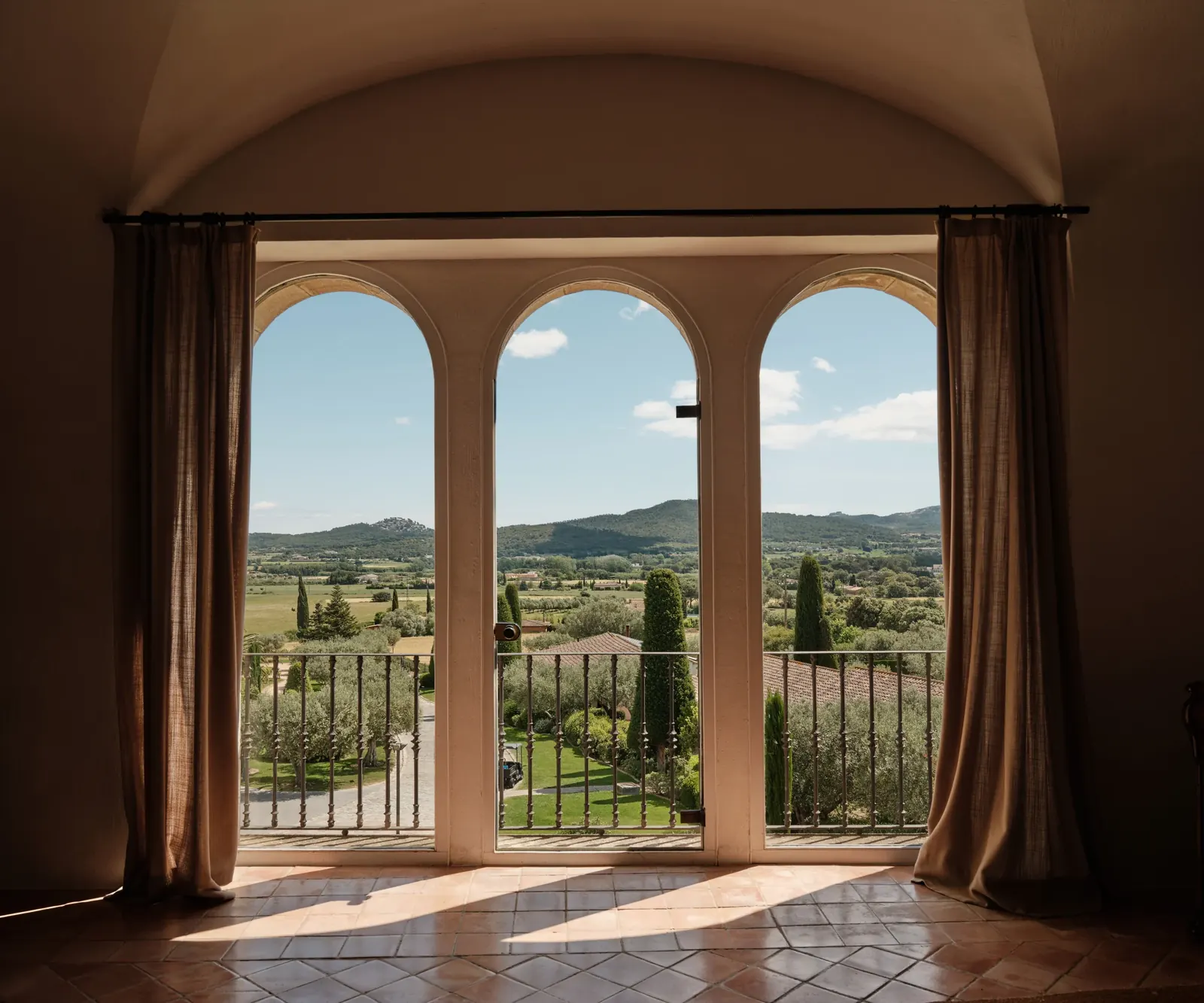
An 18th-century masia turned Relais & Châteaux: stone vaults, garden suites among hundred-year-old olives, a spa and a kitchen built on Empordà produce. Its position is the strategic point: every Baix Empordà loop starts and ends at its gate.
Hotel Peralada
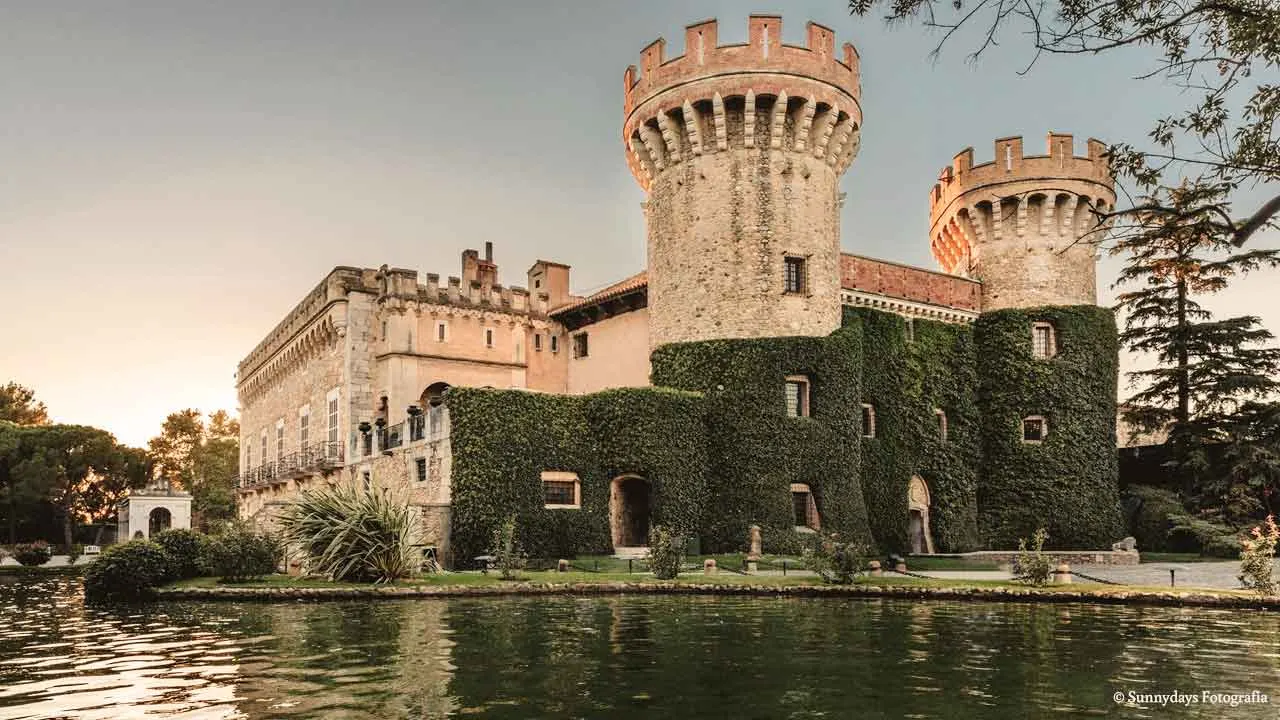
A five-star house beside the castle and the cellars of Peralada, set among lawns, olive trees and the vineyards of the Alt Empordà. A quiet base for the Albera and for Cap de Creus, with a pool and a wine spa for the legs at the end of the day.
Every journey is tailored to you
Get in touch to receive a fully personalized proposal.
Get a proposalField notes: the practical page
Bikes & support
Premium gravel, road, e-bikes and mountain bikes fitted in Girona, Europe's pro-cycling capital, where the rental and mechanic infrastructure is world-class. A support vehicle carries luggage, spares and swim kit daily. If you’d like a shorter day in the saddle, we can plan a pickup along your route. On days when your group splits, we’ll agree before you set off which route the vehicle will follow, where pickups are possible and where the riders meet again.
Getting there & away
The journey starts in Girona. You can fly into Girona–Costa Brava Airport or travel by train from Barcelona to Girona. The final day ends in Cadaqués. If you’d like a private transfer to Girona or Barcelona, let us know your onward plans and we’ll advise on timing.
A landscape that signs its work
The Empordà is a small alluvial plain caught between the last fold of the Pyrenees and the Mediterranean. Greeks landed at Empúries twenty-six centuries ago with amphorae and vine cuttings; medieval masons raised honey-stone villages a morning's walk apart; around Palafrugell, the cork woods supplied the town’s workshops, where the bark was cut into bottle stoppers. Artists have been drawn here for more than a hundred and fifty years, Dalí first among them, and they keep coming: painters, sculptors and ceramists work today in farmhouses, village lanes and medieval palaces from La Bisbal to Cadaqués. The light is hard. The tramuntana is the dry north wind you’ll hear people talk about here. On the ride through the Albera foothills, look at the olive trees on the terraces and you’ll see how they bend with it.
This journey takes that claim literally. You ride farm lanes through wheat, vines, olives and coves, thirty to sixty kilometers (twenty to thirty-seven miles) a day, and you stop, two or three times a day, wherever someone is making something. A wood-fired kiln beside Gala Dalí's castle. A perfumer's still in the Albera hills. An olive mill among dry-stone terraces. Every visit is a chance to get to know someone passionate about a craft and willing to share their daily life and their creative process.
The region: a brief history
Greeks first. Around 575 BC, traders from Phocaea founded Emporion (literally "market"). It became Rome's beachhead in 218 BC: the conquest of the whole Iberian peninsula began at Empúries. The Empordà's name, its vines and its olives all descend from that landing.
A medieval chessboard. When coastal raiding made the shore unlivable, life moved a few kilometers inland: the fortified villages you ride between (Pals, Peratallada, Monells, Ullastret) are a 12th–14th-century defensive network that peace later froze in honey-colored stone.
Cork and Cuba. By the nineteenth century, cork stoppers from Palafrugell were being shipped abroad. Men who sailed the Cuba trade came home with fortunes ("indianos"), colonial houses, and the habanera songs still sung on Calella's beach.
Salt, wind, phylloxera. L'Escala salted the Mediterranean's best anchovy; the tramuntana, the dry north wind that can blow for days, shaped roofs, rows and temperaments; phylloxera killed the vineyards in the 1880s and the current DO Empordà revival, on schist and old grenache, is barely three decades old.
Then the painters and the name. Journalist Ferran Agulló coined "Costa Brava" (the wild coast) in 1908. Dalí, born in Figueres in 1904, made Cap de Creus the most painted rock in surrealism; Duchamp brought the avant-garde to Cadaqués; Josep Pla wrote it all down. Mass tourism arrived in the 1960s but never quite conquered the Empordà's interior, which is precisely where you'll be riding.
Salvador Dalí
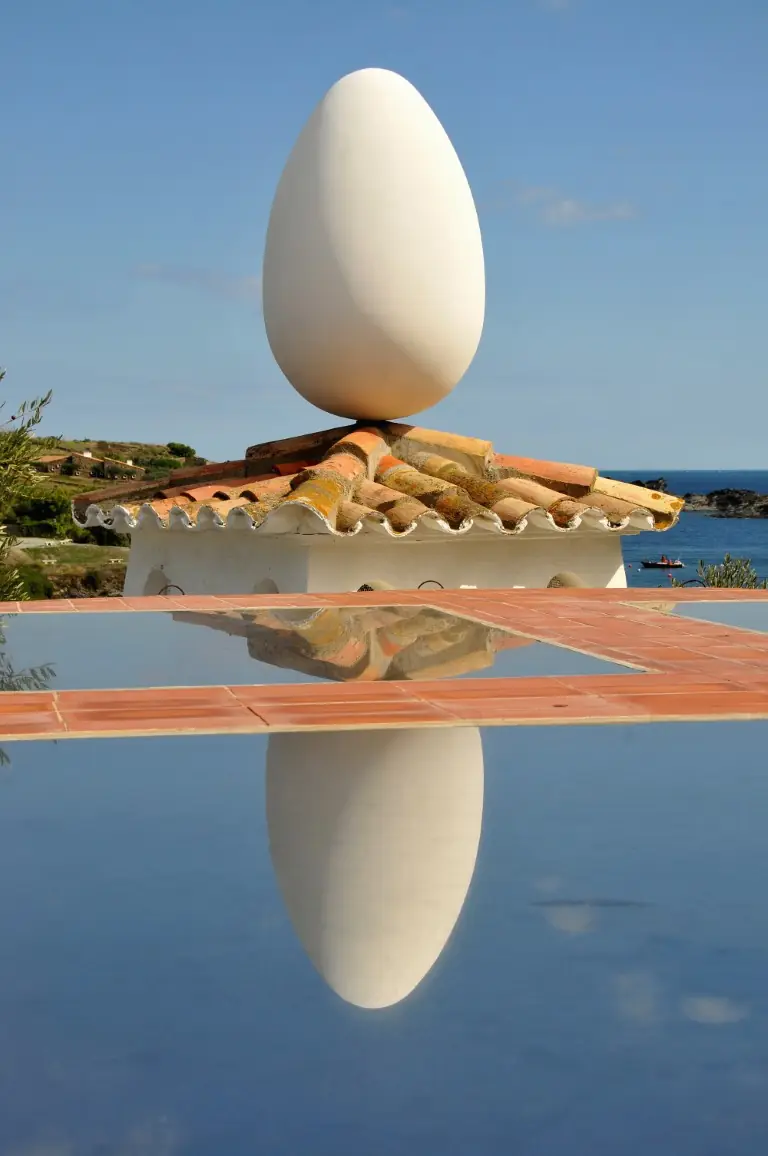
The triangle you'll close (Figueres, Púbol, Portlligat) was his life's actual geometry; the rocks of Cap de Creus recur in his paintings like a signature.
Duchamp, Hamilton & the summer avant-garde
Marcel Duchamp spent his last summers playing chess on the Melitón terrace; Richard Hamilton, Man Ray and John Cage orbited. Leave time for the galleries in Cadaqués, too.
Truman Capote
Wrote most of In Cold Blood in rented houses down the coast, proof that this shore has long been a good place to work.
Plan your Empordà journey
Tell us your dates, how many of you are traveling and what caught your eye along the route. We’ll shape the journey around you.
We’ll reply with a few times for a 20-minute call. There’s no commitment, and you’re free to leave it there.
Travel advisors: we’d be happy to put together a proposal for your clients.
Hear from us when we publish a new route.